 21:59Oldies Music · 1980s & beyond · Banned & Controversial Songs
The Most Banned Rock Song of All Time
Episode: The Most Banned Rock Song of All Time... Do You Remember Them All?
From Sora Music Rewind · 22 min ·This episode plays on YouTube — the button opens it in a new tab.
About the Most Banned Rock Song of All Time
Ask ten music fans to name the most banned rock song of all time and you may get ten different answers. Between 1965 and 1975, broadcasters, TV producers and even government agencies tried to keep certain records off the air, and young listeners often loved those songs even more for it.
This episode counts down ten rock songs that ran into censorship or official disapproval. Each story was checked against reliable sources, and popular legends have been corrected where needed.
What Counts as a Banned Song?
A "ban" could mean many things in those years. The BBC kept some records off its airwaves entirely or put them on a restricted list. Individual American stations made their own choices, and TV shows like The Ed Sullivan Show could demand changed lyrics before a band went on.
Some songs here were truly banned somewhere. Others were never formally banned, but drew pressure, lawsuits or government attention. We note the difference for each.
The Countdown: 10 Rock Songs That Faced Bans and Censorship
#10: Born to Be Wild — Steppenwolf (1968)
Songwriter Mars Bonfire has said he wrote this song about his first car, a used Ford Falcon, and the freedom of driving around Southern California. He first wrote it as a ballad. Steppenwolf sped it up, producer Gabriel Mekler recorded it, and it reached No. 2 on the Billboard Hot 100.
Its outlaw image grew when it played in the 1969 film Easy Rider, and its lyric is the first known use of "heavy metal" in a rock song. To be accurate, we found no record of a formal radio ban. It earns its place for its rebel reputation, not an official order.
#9: Light My Fire — The Doors (1967)
Robby Krieger wrote the song after Jim Morrison urged the band to write their own material, and Morrison later added to the lyrics. It spent three weeks at No. 1 in the summer of 1967.
When the Doors appeared on The Ed Sullivan Show on September 17, 1967, producer Bob Precht asked them to change a line about getting "higher," because sponsors were uneasy about drug references. The band rehearsed a changed version, but Morrison sang the original on live television. They were told they would never appear on the show again. Morrison reportedly replied that they had just done the Sullivan show.
#8: A Day in the Life — The Beatles (1967)
John Lennon took ideas from the Daily Mail in January 1967: a story connected to the car-crash death of Guinness heir Tara Browne, and a brief item about 4,000 holes in the roads of Blackburn, Lancashire. Paul McCartney added a middle section remembering his school days, riding the bus and having a smoke.
A 40-piece orchestra played a rising passage, each player moving from their lowest note to their highest. The song ends with an E-major chord on several pianos that rings for over forty seconds. On May 20, 1967, the BBC kept it off the air, saying a line could encourage a permissive attitude toward drug-taking. The ban was not lifted until March 1972.
#7: Come Together — The Beatles (1969)
The phrase began with Timothy Leary, who planned to run for governor of California and asked Lennon for a campaign song based on his slogan "Come Together — Join the Party!" Lennon turned it into something else.
His first version was close to Chuck Berry's "You Can't Catch Me," so the band slowed it down and added a heavy bass line, though Berry's publisher still sued. In America it went to No. 1 as a double A-side with "Something." The BBC, with its strict rule against brand names, kept it off the air because of a line mentioning Coca-Cola.
#6: Let's Spend the Night Together — The Rolling Stones (1967)
The Stones recorded this song in August 1966 at RCA Studios in Hollywood. According to engineer Glyn Johns, two police officers stopped by to check on an open door, and their truncheons ended up providing the clicking percussion sound in the break.
Released in January 1967 with "Ruby Tuesday" on the other side, the song got far less American airplay because of its suggestive title. "Ruby Tuesday" went to No. 1, while this side stalled at No. 55. On The Ed Sullivan Show that month, the band agreed to sing "let's spend some time together," and Jagger rolled his eyes on camera as he did.
#5: Give Peace a Chance — Plastic Ono Band (1969)
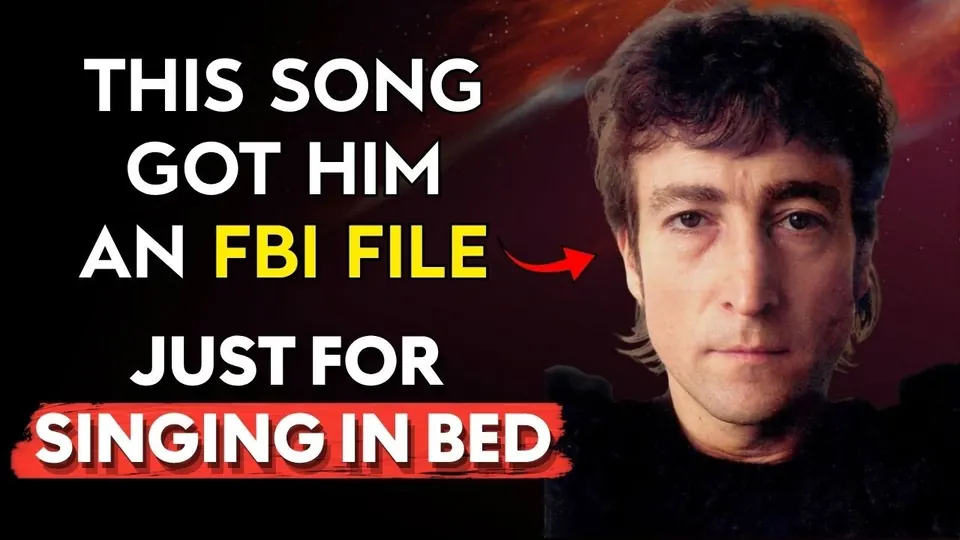
This song was recorded on June 1, 1969, in Room 1742 of the Queen Elizabeth Hotel in Montreal, during John Lennon and Yoko Ono's bed-in for peace. Lennon had come up with the phrase after a reporter asked what they hoped to achieve by staying in bed. Guests in the room included Timothy Leary and Tommy Smothers.
The song was not banned on the radio. It reached No. 14 in America, and on November 15, 1969, about half a million demonstrators in Washington sang it together, led by Pete Seeger. Lennon's activism did draw the government's eye: in 1971 and 1972 the FBI kept him under surveillance, and immigration officials tried to deport him.
#4: Eve of Destruction — Barry McGuire (1965)
P. F. Sloan was still a teenager when he wrote this blunt protest song in 1965. McGuire later recalled recording it in one take, reading the words from a crumpled sheet of paper. The vocal was never meant to be final, but a rough mix leaked to a disc jockey, who started playing it.
Some American stations banned it, claiming it aided the enemy in Vietnam. Radio Scotland banned it, and the BBC put it on a restricted list. It still reached No. 1 on the Billboard Hot 100 in September 1965, taking the top spot from the Beatles' "Help!"
#3: For What It's Worth — Buffalo Springfield (1966)
Many hear this as a Vietnam protest, but Stephen Stills wrote it about something closer to home. In November 1966, young music fans gathered on the Sunset Strip in Los Angeles to protest a 10 p.m. curfew and anti-loitering rules. On November 12, about 1,000 people gathered at the club Pandora's Box, among them Jack Nicholson and Peter Fonda, who was handcuffed by police.
Stills recorded the song on December 5, 1966, with Neil Young's guitar harmonics ringing through it. Los Angeles station KHJ began playing it just days later, and it peaked at No. 7 in March 1967. We found no record of a formal ban. Its place here comes from the clash it describes.
#2: Sky Pilot — Eric Burdon and the Animals (1968)
"Sky pilot" is old slang for a military chaplain. The song follows a chaplain who blesses young soldiers before they go into battle, then waits for them to return.
At over seven minutes, it was split across both sides of the single. The middle section is filled with sound effects of aircraft, gunfire and shouting, along with bagpipes played by the Royal Scots Dragoon Guards. It reached No. 14 in America in 1968. We could not confirm any formal ban.
#1: Hurricane — Bob Dylan (1975)
Rubin "Hurricane" Carter was a boxer convicted of a 1966 triple murder in Paterson, New Jersey. After reading his prison memoir, The Sixteenth Round, Dylan visited him and wrote this song with Jacques Levy.
Columbia's lawyers objected to lines about two witnesses, so Dylan re-recorded the song in October 1975, with Scarlet Rivera's violin driving it. The final version runs over eight minutes and reached No. 33. A benefit concert at Madison Square Garden raised $100,000 for Carter's cause.
In 1985, after about 19 years behind bars, a federal judge overturned his conviction, saying it rested on "an appeal to racism rather than reason." The song did not free him, but it brought his case to millions. Carter died in 2014, at age 76.
Why Banning a Rock Song Rarely Worked
Almost every attempt at censorship on this list backfired. Songs kept off the BBC still sold, and a Doors performance meant to be softened became famous for not being softened. Lyrics that alarmed broadcasters in 1967 now play freely on oldies stations.
Which of these songs do you remember hearing first, and did you know someone had tried to keep it off the air?
Sources and Further Reading
Topics in This Story
Your turn...
Which song takes you right back — and where were you when you first heard it?
Tell us the story — fellow fans would love to hear it.
We check every fact — but if you spot a mistake, we'd love to know.Report a correction →
More Banned & Controversial Songs Stories
21:59Oldies Music · 1980s & beyond · Banned & Controversial Songs 24:05Oldies Music · 1960s · Banned & Controversial Songs
Controversial 60s Songs That Changed America
 30:23Oldies Music · 1970s · Banned & Controversial Songs