 22:05Oldies Music · Banned & Controversial Songs
Controversial 60s Songs That Changed America
Episode: 12 Controversial Songs That Changed America in the '60s
From Sora Music Rewind · 24 min ·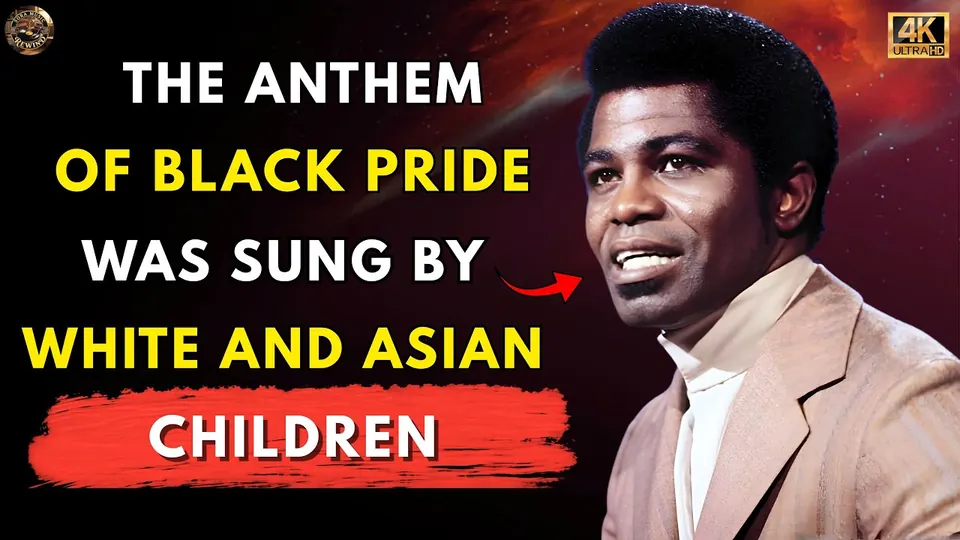
What Made These Controversial 60s Songs So Powerful
The controversial 60s songs in this countdown arrived while America argued over war, civil rights, drugs and the draft, often on the same AM dial. Some were banned, some angered their own fans, and some were misunderstood for decades.
This episode counts down twelve of them. Each story was checked against chart records and published accounts, and a few details from the video have been corrected.
The Countdown: 12 Songs That Stirred Up the Sixties
#12: (I Can't Get No) Satisfaction — The Rolling Stones (1965)
Keith Richards said the riff came to him in his sleep. He caught it on a cassette player: about two minutes of guitar, then what he called forty minutes of snoring. Accounts differ on where that happened, and his own memoir places it at his London flat. Mick Jagger wrote the lyrics by a pool in Clearwater, Florida.
Richards saw the fuzz guitar as a placeholder for horns, but the band outvoted him. The single held No. 1 on the Hot 100 for four weeks in July 1965. In Britain, the lyrics were considered too suggestive, so it first got airplay mainly on pirate radio. Gibson's fuzzboxes sold out by year's end.
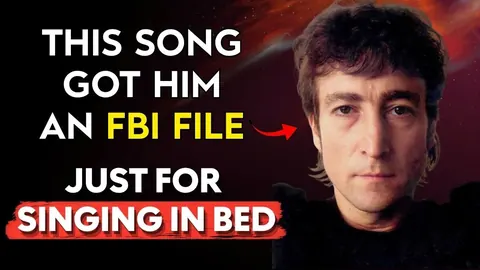
#11: Revolution — The Beatles (1968)
John Lennon wrote this during the protests of 1968, sympathetic to change but doubtful about violent tactics. On the single, he told would-be radicals to count him out.
Released as the B-side of "Hey Jude," it reached No. 12 on the Hot 100. The New Left was not pleased. Ramparts called it a betrayal. Lennon wavered, but in his final interview in 1980 he stood by the message: count him out if it was for violence.
#10: Sympathy for the Devil — The Rolling Stones (1968)
Jagger drew on Mikhail Bulgakov's novel The Master and Margarita, a gift from Marianne Faithfull. Recording began at London's Olympic Studios on June 4, 1968. When Robert F. Kennedy was shot the next day, the line about who killed Kennedy was changed to "the Kennedys."
It began as a folk tune before Richards pushed it toward samba. The "woo woo" chant came after Anita Pallenberg heard producer Jimmy Miller murmuring along in the booth.
It was an album track on Beggars Banquet, not a big American single. Its darker reputation grew after Altamont in 1969, though the killing of Meredith Hunter there happened during "Under My Thumb," not this song, as early reports wrongly said.
#9: White Rabbit — Jefferson Airplane (1967)
Grace Slick wrote it around the turn of 1966, while with the Great Society. The music leans on Miles Davis's Sketches of Spain and Ravel's Boléro.
Slick said the song was a wake-up call to parents who read their children stories full of pills and potions, then wondered why the kids used drugs. Its Alice in Wonderland imagery slipped drug references past radio censors, and it reached No. 8 on the Hot 100. In later years Slick turned to painting, with Alice a favorite subject.
#8: Blowin' in the Wind — Bob Dylan (1963)
Dylan first performed this at Gerde's Folk City in New York in April 1962. He later admitted taking the melody from the spiritual "No More Auction Block."
Peter, Paul and Mary turned it into a hit. Their version sold 300,000 copies in its first week and reached No. 2 on the Hot 100 in August 1963. That same month, the trio sang it at the March on Washington, where Dylan also performed.
In 2022, a one-of-a-kind new recording Dylan made with T Bone Burnett sold through Christie's for about $1.78 million.
#7: Fortunate Son — Creedence Clearwater Revival (1969)
John Fogerty said he wrote it in about twenty minutes. In his autobiography, he linked it to David Eisenhower, then dating Julie Nixon, and to the sons of the powerful who seemed safe from combat. Fogerty knew the draft firsthand: he received his notice in 1966 and served in the Army Reserve.
The song was paired with "Down on the Corner." That two-sided single reached No. 3, though "Fortunate Son" on its own is credited with a No. 14 peak. Its flag-waving opening is often misread, and Fogerty has objected to its use in ads and at political rallies.
#6: Eve of Destruction — Barry McGuire (1965)
P.F. Sloan wrote this grim warning in 1965, and the Byrds turned it down. Barry McGuire, formerly of the New Christy Minstrels, recorded it in July. He recalled doing it in one take, reading the words off a crumpled piece of paper.
That vocal was a rough guide, but a mix leaked to a disc jockey. Some American stations banned it, and the BBC restricted it. On September 25, 1965, it replaced the Beatles' "Help!" at No. 1. McGuire never had another Top 40 hit.
#5: The Times They Are a-Changin' — Bob Dylan (1964)
Dylan recorded this in October 1963 for his third album, released in early 1964. He later said he wanted "a big song" with short, concise verses, modeled on Irish and Scottish ballads, and he called it a song with a purpose.
The video says Dylan spent years denying it was a protest song, but his own words describe a deliberate anthem. It was a Top 10 single in Britain in 1965.
#4: For What It's Worth — Buffalo Springfield (1967)
Stephen Stills wrote this after the Sunset Strip curfew protests of November 1966, when young people gathered near a club called Pandora's Box to oppose a 10 p.m. curfew. It was about Los Angeles, not Vietnam.
Neil Young added the chiming guitar harmonics. The title is never sung. Stills reportedly offered it to Ahmet Ertegun saying, "for what it's worth," and the name stuck. It peaked at No. 7, and it later became a lasting symbol of the whole protest era.
#3: Street Fighting Man — The Rolling Stones (1968)
Jagger wrote new lyrics after attending a big anti-war rally outside the U.S. Embassy in London in March 1968, and after watching the student uprising in Paris.
The track sounds huge, but the basic guitar was recorded on a small Philips cassette machine, with Brian Jones adding sitar. The American single came out within days of the violent clashes at the 1968 Democratic National Convention, and Chicago stations refused to play it. Jagger said he was rather pleased, joking that you cannot start a revolution with a record. It peaked at No. 48.
#2: I-Feel-Like-I'm-Fixin'-to-Die Rag — Country Joe and the Fish (1965)
Country Joe McDonald, who had served three years in the Navy, wrote this jaunty jug-band tune about Vietnam in 1965 in well under half an hour. It first appeared on a homemade EP of about 100 copies.
At Woodstock in 1969, McDonald led a famously rude cheer before the song, and the huge crowd joined in. He later said former prisoner of war Phillip Butler told him the song had been played to POWs in Hanoi and lifted their spirits. McDonald worked for veterans' causes for decades. He died in March 2026, at 84.
#1: Say It Loud – I'm Black and I'm Proud — James Brown (1968)
The day after Martin Luther King Jr. was killed in April 1968, James Brown went ahead with his Boston Garden concert. City leaders arranged for WGBH to televise it live to help keep people home, and Brown expected to lose ticket money because of it.
That August, he recorded this anthem near Los Angeles with about thirty young people from Watts and Compton shouting the response. It held No. 1 on the R&B chart for six weeks and reached No. 10 on the Hot 100.
The song became an unofficial anthem of the Black Power movement. Harry Weinger, longtime keeper of Brown's catalog, has said it cost Brown much of his white audience. Brown died in 2006.
Why These Controversial 60s Songs Still Matter
Many of these songs were misunderstood. A curfew protest became a war anthem, a pacifist plea was called a sellout, and a class-conscious rocker became rally music.
Yet each gave people words for what they felt, whether fear, anger, pride or doubt. That is why they still turn up in films and on oldies radio.
Which of these songs still stops you in your tracks, and where were you the first time you heard it?
Sources and Further Reading
Topics in This Story
Your turn...
Which song takes you right back — and where were you when you first heard it?
Tell us the story — fellow fans would love to hear it.
We check every fact — but if you spot a mistake, we'd love to know.Report a correction →