 22:05Oldies Music · Banned & Controversial Songs
Controversial 1980s Songs That Changed Music
Episode: 10 Most Controversial Songs of the 1980s That Changed Music Forever
From Sora Music Rewind · 22 min ·This episode plays on YouTube — the button opens it in a new tab.
What Made These Controversial 1980s Songs So Divisive
The controversial 1980s songs in this episode stirred up debates in living rooms, radio stations, courtrooms and even the United States Senate. Some were banned, and some were simply misunderstood.
This countdown follows the episode from #10 to #1. Chart positions and dates were checked against Billboard records and other reliable sources, and a few popular myths have been set straight.
How the Countdown Unfolds, From No. 10 to No. 1
#10: Born in the U.S.A. — Bruce Springsteen (1984)
Springsteen wrote this song in 1981. The finished version, cut with the E Street Band in New York in 1982, set lyrics about a Vietnam veteran's hard homecoming against a booming beat and Roy Bittan's synthesizer riff.
His concern for veterans was real. He had befriended Ron Kovic, author of Born on the Fourth of July, and in 1981 he played a benefit concert for the Vietnam Veterans of America.
In September 1984, columnist George Will praised Springsteen, and days later President Ronald Reagan mentioned him in a campaign speech. Many heard only the proud chorus, not the sad verses. The single reached No. 9 on the Billboard Hot 100, and the album finished 1985 as Billboard's top album of the year.
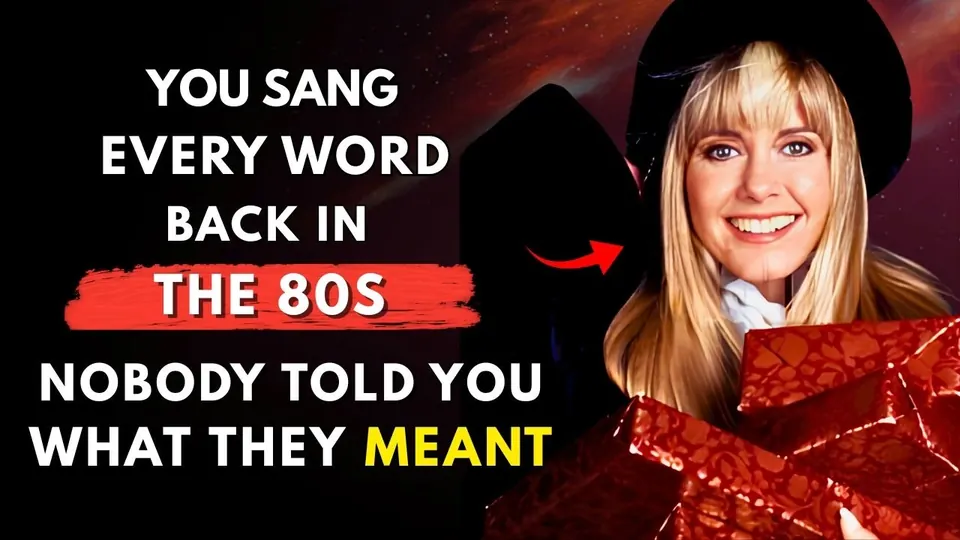
#9: Physical — Olivia Newton-John (1981)
Steve Kipner and Terry Shaddick wrote "Physical" with a male rock singer in mind, and Tina Turner passed on it before it reached Olivia Newton-John.
She reportedly worried about the suggestive lyrics and asked for it to be pulled, but it was already climbing the charts. Some stations censored or banned it, while the comic gym-set video kept things playful.
The single spent ten weeks at No. 1 on the Billboard Hot 100, from November 1981 into January 1982. Billboard later ranked it the top Hot 100 song of the 1980s. Olivia Newton-John died in August 2022 at age 73, and the song remains one of her best-loved hits.
#8: In the Air Tonight — Phil Collins (1981)
For decades, a rumor claimed this song was about Collins watching a man refuse to save someone from drowning. Collins has denied it. He wrote it during his 1980 divorce, and has said it holds a lot of anger and frustration.
That famous drum sound has a real studio story behind it. During sessions for Peter Gabriel's 1980 album, engineer Hugh Padgham and Collins came upon a heavily compressed, "gated" drum sound through a microphone meant for studio talkback, and they used it to full effect here.
Nobody banned this one; its controversy was a myth listeners built themselves. The single reached No. 2 in Britain and No. 19 on the Hot 100.
#7: Money for Nothing — Dire Straits (1985)
Mark Knopfler got the idea in a New York appliance store, listening to a deliveryman grumble at the rock stars on a wall of TV screens. Knopfler borrowed the man's words for the lyrics. Sting sang the "I want my MTV" part and shares the writing credit.
Its computer-animated video was the first one MTV Europe aired, in 1987. The single spent three weeks at No. 1 on the Hot 100 and won a Grammy.
The trouble came in 2011. In January, Canada's Broadcast Standards Council ruled the unedited version, which contains an anti-gay slur, unacceptable for private radio. Stations in Edmonton and Halifax protested by playing it for an hour straight, and that August the council left the choice to each station.
#6: We're Not Gonna Take It — Twisted Sister (1984)
Dee Snider's rowdy anthem, released in May 1984, was the band's only Top 40 single, peaking at No. 21. Its cartoon-style video starred Mark Metcalf of Animal House as a stern father blasted out a window by his son's guitar.
In 1985 the Parents Music Resource Center, or PMRC, put the song on its "Filthy Fifteen" list over alleged violence. On September 19, 1985, Snider testified before a Senate committee. He calmly described himself as a married father who did not drink, smoke or use drugs, and argued that the dark meanings the PMRC found in his songs existed only in their reading, and that parents should make those choices.
#5: Darling Nikki — Prince (1984)
This track from Purple Rain was never released as a single. Prince recorded it in May 1983 at his home studio in Chanhassen, Minnesota. At the end, a passage played backward turns out, when played forward, to be a gentle message about the Lord coming soon.
Tipper Gore reportedly heard her 11-year-old daughter, Karenna, listening to it. In 1985 she co-founded the PMRC with Susan Baker, Pam Howar and Sally Nevius, and "Darling Nikki" topped the group's "Filthy Fifteen."
In late 1985 the record industry agreed to put warning labels on some albums, which led to the familiar "Parental Advisory" logo of the 1990s.
#4: Relax — Frankie Goes to Hollywood (1984)
Holly Johnson said the lyrics came to him while walking down Princes Avenue in Liverpool. Producer Trevor Horn built its pounding electronic sound.
On January 11, 1984, BBC Radio 1 DJ Mike Read objected on air to the record's suggestive sleeve and lyrics. The BBC reportedly banned it two days later. When "Relax" reached No. 1, Top of the Pops showed only a still picture of the group.
The ban backfired: the single spent five weeks at No. 1 in Britain. In America it peaked at No. 10 in 1985.
#3: Another Brick in the Wall, Part 2 — Pink Floyd (1979)
Producer Bob Ezrin suggested a disco beat and a longer arrangement for Roger Waters' short song about harsh schooling. Engineer Nick Griffiths then recorded 23 pupils from Islington Green School in North London while the band was away. Waters was delighted when he heard the result.
The song topped the charts in 14 countries, including the Billboard Hot 100 in 1980. That year, after it was taken up by supporters of a school boycott protesting apartheid education, South Africa banned the single and the album.
The school received £1,000 and the children no royalties. A 1996 change in British law made them eligible, and former choir members filed a claim in 2004.
#2: Suicide Solution — Ozzy Osbourne (1980)
This song from Blizzard of Ozz is about the dangers of alcohol, not a call to self-harm. Lyricist Bob Daisley called it a warning to anyone drinking themselves into an early grave. Osbourne linked it to the 1980 death of AC/DC singer Bon Scott.
In October 1984, a 19-year-old California fan, John McCollum, died by suicide. His parents sued Osbourne and CBS Records, arguing the music was to blame. The courts dismissed the case, and a California appeals court ruling in 1988 held that the song was protected by the First Amendment.
Guitarist Randy Rhoads, who co-wrote the music, died in a plane accident in March 1982 at age 25. Ozzy Osbourne himself died in July 2025 at age 76.
If you or someone you know is struggling, help is available in the United States by calling or texting 988.
#1: One in a Million — Guns N' Roses (1988)
This acoustic track appeared on G N' R Lies in 1988. Axl Rose based it on being hustled at a Los Angeles bus station after he first arrived in town. Its lyrics included slurs aimed at Black people, gay people and immigrants, drawing swift backlash.
In 1989, at a Los Angeles show where both bands opened for the Rolling Stones, Living Colour's Vernon Reid spoke out against the song from the stage. Slash, whose mother is Black, said he did not condone it, though he did not condemn his bandmate.
When the band's large Appetite for Destruction box set came out in 2018, the other G N' R Lies songs were included, but this one was left off by shared decision.
Why These Songs Still Spark Debate
The arguments were rarely about the music alone. A patriotic-sounding chorus hid a sad story, a rumor gave a breakup song a murder plot, and a young girl's record led to a Senate hearing.
Together, these controversial 1980s songs show how a single record could make people argue about art, freedom and responsibility.
Which of these songs do you remember causing a stir in your own home, and did you side with the parents or with the radio?
Sources and Further Reading
Topics in This Story
Your turn...
Which song takes you right back — and where were you when you first heard it?
Tell us the story — fellow fans would love to hear it.
We check every fact — but if you spot a mistake, we'd love to know.Report a correction →