 22:07Oldies Music · 1966 · Classic Rock & Roll
Rock Songs From 1973 That Sound Like Freedom
Episode: Top 10 Rock Songs From 1973 That Still Define What Freedom Sounds Like
From Sora Music Rewind · 21 min ·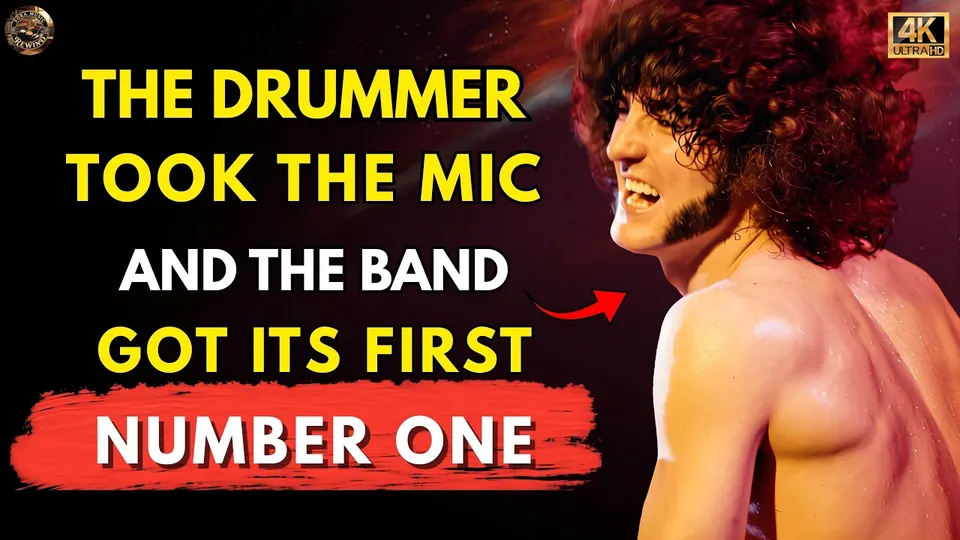
About These Rock Songs From 1973
The rock songs from 1973 still sound like an open highway, with the windows down and the radio turned up. That year gave us arena anthems, Southern rock epics, a Bond theme and a raw punk blueprint, all on the same dial.
This episode counts down ten songs that carry a feeling of freedom. Below is the story behind each one, checked against chart records and reliable histories. Where the episode's version of events did not match the record, we went with the facts.
The Countdown: 10 Rock Songs That Sound Like Freedom
#10: We're an American Band — Grand Funk Railroad (1973)
Mark Farner usually sang lead for Grand Funk, but this time drummer Don Brewer wrote the song and stepped up to the microphone himself. Brewer has said he wrote it on tour in 1972, drawing on life on the road, including all-night poker with blues great Freddie King and his band.
He has also called the old story about a bar argument with the British band Humble Pie a myth. Todd Rundgren produced the record at Criteria Studios in Miami in June 1973, with new keyboardist Craig Frost now in the lineup. On September 29, 1973, it became the band's first No. 1 single.
#9: Smoke on the Water — Deep Purple (1973)
In December 1971, Deep Purple came to Montreux, Switzerland, to record at the casino. The night before their sessions, during a Frank Zappa and the Mothers of Invention concert, someone in the crowd fired a flare gun into the ceiling, and the building burned.
Claude Nobs, head of the Montreux Jazz Festival, helped audience members get out, and he is the "Funky Claude" of the lyrics. The band tried a nearby theater until police shut down the noise, then recorded most of the album in the hallways of the Grand Hôtel. The song first appeared on Machine Head in 1972. Released as a single in May 1973, it climbed to No. 4 on the Billboard Hot 100.
#8: Live and Let Die — Paul McCartney and Wings (1973)
The film's producers asked McCartney for a theme before the screenplay was even finished. He requested a copy of Ian Fleming's novel and wrote the song that same day. George Martin, his old Beatles producer, arranged the orchestra and produced the session at AIR Studios in London in October 1972.
McCartney's condition was simple: Wings would perform the song over the opening titles. The single reached No. 2 on the Hot 100, became the first Bond song nominated for an Oscar and won a Grammy for its arrangement. In 1991, Guns N' Roses gave it a hard-rock makeover.
#7: Takin' Care of Business — Bachman–Turner Overdrive (1973)
Randy Bachman started this one years earlier as "White Collar Worker," a song nobody much liked. At a Vancouver show, after singer Fred Turner lost his voice, Bachman sang it with a new chorus built on a catchphrase from a local DJ.
The famous piano was played by Norman Durkee at Kaye-Smith Studios in Seattle. Bachman remembered him as a pizza delivery man who overheard the band; other accounts say he was a session player working next door. The song appeared on Bachman–Turner Overdrive II in December 1973, and the single reached No. 12 in 1974.
#6: Search and Destroy — Iggy and the Stooges (1973)
The Stooges had broken up after two poorly selling albums. With David Bowie's management behind him, Iggy Pop signed with Columbia, moved to London with guitarist James Williamson, and reunited the band to record Raw Power. Iggy said the title came from a column heading in a Time magazine article about the Vietnam War.
Bowie remixed most of the album in a single day on a tight budget, though Iggy's own mix of this song was reportedly kept. Raw Power peaked at only No. 183 on the album chart. Yet the song became a model for punk, with critics tracing its influence to the Sex Pistols, the Ramones and Nirvana. Iggy released his own, much louder remix in 1997.
#5: Ramblin' Man — The Allman Brothers Band (1973)
Dickey Betts borrowed the title from Hank Williams and a key line from a friend named Kenny Harwick, a fence builder who liked to answer his own questions. Betts carried that line around for about three years.
He thought the song might be too country for the band and once considered sending it to Johnny Cash. The group had lost Duane Allman and Berry Oakley in separate motorcycle accidents just over a year apart, and this was one of Oakley's last recordings with them. Released in August 1973, it reached No. 2, kept out of the top spot by Cher's "Half-Breed." It remains the band's only Top 10 single.
#4: Dream On — Aerosmith (1973)
Steven Tyler said he wrote the music on an upright piano at Trow-Rico Lodge in Sunapee, New Hampshire, when he was about seventeen, years before Aerosmith formed. His father was a Juilliard-trained musician, and Tyler credited the classical music he heard as a small child for the song's chords.
The first single, a shortened edit, peaked at No. 59 in 1973. Columbia reissued it in 1976 using the full album version, and this time it climbed to No. 6.
#3: Goodbye Yellow Brick Road — Elton John (1973)
Elton John and lyricist Bernie Taupin flew to Kingston, Jamaica, in January 1973 to record. Taupin wrote the album's lyrics in about two and a half weeks, and Elton composed most of the melodies in three days at his hotel. But piano and equipment trouble, the crowds around the Foreman–Frazier fight and local unrest drove them to the Château d'Hérouville in France.
For the title song, Taupin drew on his childhood on a Lincolnshire farm. In 2014, he said it is about wanting to leave Oz and get back to the farm. The single reached No. 2 in America and No. 6 in Britain.
#2: Can't You See — The Marshall Tucker Band (1973)
Guitarist Toy Caldwell of Spartanburg, South Carolina, brought this song to a band rehearsal, saying he had a great first verse. Singer Doug Gray has said he wrote the second verse down on a piece of brown paper because Toy could not remember it, and that he still has it.
Gray turned down the lead vocal, so Caldwell sang it himself. The 1973 single only bubbled under the Hot 100, and a later live version reached No. 75 in 1977. Waylon Jennings took it to No. 4 on the country chart in 1976, and it remains a Southern rock favorite.
#1: Free Bird — Lynyrd Skynyrd (1973)
Allen Collins had a chord pattern that Ronnie Van Zant first felt had too many changes for a melody. About two years later, Collins played it again at rehearsal, and Van Zant wrote the melody and lyrics in a few minutes. The opening line came from a question Collins's girlfriend, Kathy, once asked him.
Roadie Billy Powell wrote the piano introduction, and the band made him a full member. The long guitar finale first gave Van Zant a rest during club sets. It closed their 1973 debut album and reached No. 19 as a single in 1975.
Ronnie Van Zant died in a plane crash on October 20, 1977. On the 1987 tribute tour, the band played "Free Bird" as an instrumental with his hat on a spotlit microphone stand while the crowd sang. His brother Johnny did not sing it until 1991.
Why These Songs Still Feel Like Freedom
Few of these records were planned as anthems. A drummer took the lead vocal. A fire forced a band into a hotel hallway. A friend's offhand remark became a hit chorus, and a forgotten single got a second chance three years later.
That may be why the rock songs from 1973 still sound so loose and alive. They were made by people following their instincts, not a formula, and the songs kept traveling on car radios, at concerts and at family gatherings.
Which of these songs takes you back to a certain road, a certain car or a certain summer, and who was riding with you?
Sources and Further Reading
Topics in This Story
Your turn...
Which song takes you right back — and where were you when you first heard it?
Tell us the story — fellow fans would love to hear it.
We check every fact — but if you spot a mistake, we'd love to know.Report a correction →
More Classic Rock & Roll Stories
22:07Oldies Music · 1966 · Classic Rock & Roll 27:48Oldies Music · Stories Behind the Songs
Best-Selling Rock Song in History: The Secret
 20:04Oldies Music · 1977 · Classic Rock & Roll