 25:18Oldies Music · Stories Behind the Songs
Best-Selling Rock Song in History: The Secret
Episode: The Best-Selling Song In Rock History — The Secret Behind The Success
From Sora Music Rewind · 28 min ·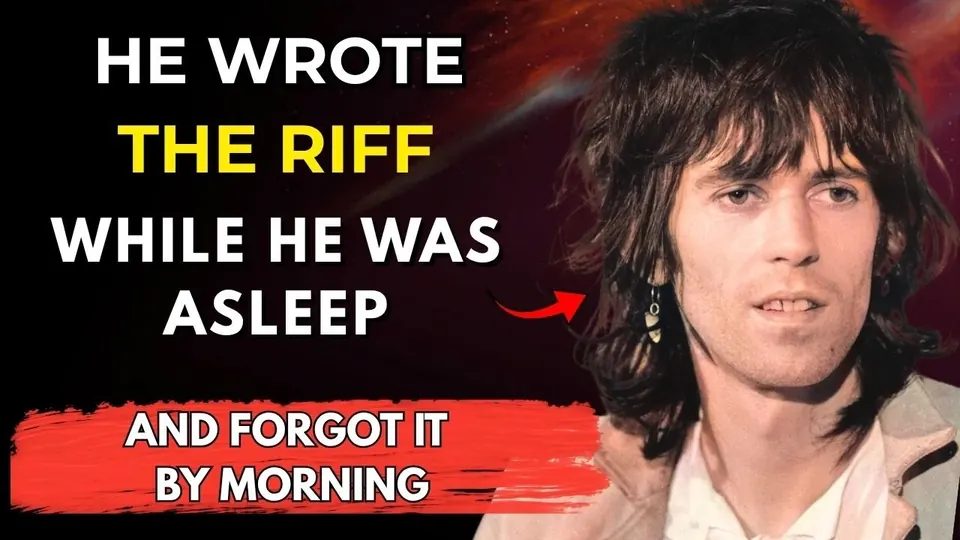
Which Is the Best-Selling Rock Song in History?
The best-selling rock song in history is harder to name than you might expect, because sales from the 1950s and 1960s were rarely audited and sources count in different ways. Two records usually come up in that conversation, and both close out this countdown.
This episode looks at ten famous recordings, from a 1958 instrumental to a 1997 farewell. We checked each story against chart records, court records and other reliable sources, and corrected the details that did not hold up.
The Countdown: 10 Rock Songs and the Secrets Behind Them
#10: Rumble — Link Wray and His Ray Men (1958)
Link Wray worked out this instrumental at a show in Fredericksburg, Virginia, while his band was trying to come up with a backing for another song. When they recorded it in Washington, D.C., the sound came out too clean, so Wray poked a pencil through his amplifier's speaker cone to rough it up.
The record reached No. 16 on the pop chart. It has no lyrics, yet some stations would not play it because the title suggested gang fights. Pete Townshend of the Who later said that without "Rumble" he would never have picked up a guitar. Wray died in 2005, and he was inducted into the Rock and Roll Hall of Fame in 2023.
#9: Whole Lotta Love — Led Zeppelin (1969)
Jimmy Page worked up the riff in the summer of 1968 on his houseboat on the River Thames, and the band recorded at Olympic Studios in London the next spring. The strange middle section uses Page's theremin and a backwards echo effect.
Some lyrics closely followed "You Need Love," written by Willie Dixon and recorded by Muddy Waters in 1962. Dixon sued in 1985 and the case was settled in his favor. In America, an edited single reached No. 4, the band's only U.S. top 10 hit. No single came out in Britain, but versions of the tune later opened the BBC's Top of the Pops for years.
#8: Hotel California — Eagles (1977)
Don Felder wrote the music in a rented beach house in Malibu. Don Henley said the demo sounded like "Mexican reggae," which became its working title, and he wrote the lyrics with Glenn Frey. Henley has described it as a journey from innocence to experience, not a story about a real hotel.
The closing guitar duel between Felder and Joe Walsh was not one lucky take. Producer Bill Szymczyk said it took about three days, pieced together from many edits. The single reached No. 1 in May 1977 and won the Grammy for Record of the Year.
#7: Stairway to Heaven — Led Zeppelin (1971)
Much of the song took shape at Headley Grange in Hampshire, England, a house built in 1795 as a workhouse for the poor. Robert Plant wrote his first lyric ideas beside a log fire there. John Bonham's drums do not come in until about 4:18.
It was never released as a commercial single in the United States, yet it became the most-requested song on American FM radio in that era. A 2014 lawsuit claimed the opening echoed Spirit's 1968 instrumental "Taurus." A jury found no infringement, an appeals court agreed in 2020, and the Supreme Court declined to hear the case.
#6: (I Can't Get No) Satisfaction — The Rolling Stones (1965)
Keith Richards came up with the riff in his sleep. He recorded a rough version on a small cassette player and went back to bed, leaving about two minutes of guitar and roughly forty minutes of snoring. A Florida hotel is often named, but Richards' memoir places him at his flat in London.
He played it through a Maestro Fuzz-Tone pedal, meaning it only as a sketch for a horn part. The fuzz stayed. The single topped the Billboard Hot 100 for four weeks in the summer of 1965. In Britain, the lyrics were thought too suggestive at first, so early airplay came mainly from pirate radio stations.
#5: Bohemian Rhapsody — Queen (1975)
At nearly six minutes, it worried record executives, but Freddie Mercury refused to cut it. Recording took five studios, and Mercury, Brian May and Roger Taylor stacked their voices so many times that May said he could see light through one worn tape.
Disc jockey Kenny Everett was given a copy on the condition that he not play it. He played it 14 times in two days on London's Capital Radio. It spent nine weeks at No. 1 in Britain and returned to the top after Mercury's death in 1991. In 2018 it became the most-streamed song from the 20th century.
#4: Don't Stop Believin' — Journey (1981)
Jonathan Cain took the title from his father, who encouraged him over the phone while Cain was a struggling musician in Los Angeles. The song breaks a usual pop rule: its true chorus does not arrive until about three minutes and twenty seconds in.
It peaked at No. 9 in 1981. Its second life came in 2007 with the final scene of The Sopranos, then in 2009 with Glee. By 2012 it was the best-selling digital track from the twentieth century, and it is now certified 18 times platinum in the United States.
#3: It's Now or Never — Elvis Presley (1960)
While serving in Germany, Elvis heard Tony Martin's 1949 record "There's No Tomorrow," set to the melody of "'O Sole Mio." Aaron Schroeder and Wally Gold then wrote new lyrics, and Elvis recorded it in Nashville on April 3, 1960.
It spent five weeks at No. 1 in America. In Britain, rights questions delayed release until late October, and it entered the chart at No. 1. Sales are often estimated at around 20 million copies worldwide. In 2005, nearly three decades after his death, a reissue took it back to No. 1 in Britain.
#2: Rock Around the Clock — Bill Haley and His Comets (1954)
Recorded on April 12, 1954, in New York, it first came out as a B-side and sold disappointingly. Guitarist Danny Cedrone played the solo, reusing one from Haley's 1952 record "Rock the Joint." He died after a fall down a stairway that June, long before the song's success.
Everything changed in 1955, when Blackboard Jungle played it over the opening credits. It held No. 1 for eight weeks that summer. Guinness long listed its sales at 25 million or more, though the figure was never audited. That is why it is so often named the best-selling rock and roll single.
#1: Candle in the Wind 1997 — Elton John (1997)
Elton John and Bernie Taupin first wrote "Candle in the Wind" in 1973 about Marilyn Monroe. After Diana, Princess of Wales, died in Paris on August 31, 1997, Taupin rewrote the words. Elton sang them at her funeral in Westminster Abbey on September 6, his only public performance of this version.
He recorded it that same day in London with producer George Martin, and the proceeds went to Diana's memorial fund. With over 33 million copies sold, Guinness calls it the best-selling single since the U.K. and U.S. charts began in the 1950s. Strictly speaking, it is a piano ballad rather than a rock song.
Why the Sales Numbers Are So Hard to Pin Down
For records from the 1950s and 1960s, nobody kept a careful worldwide count. Labels reported their own figures, and later estimates were repeated from book to book. That is why the claims for "Rock Around the Clock" and "It's Now or Never" are best read as estimates. Modern certifications and streaming totals are far more precise.
What These Songs Have in Common
Almost none of these songs followed the rules: a torn speaker, a sleepy cassette tape, a six-minute single and a B-side rescued by a movie. They lasted because listeners kept asking for them, year after year.
Which of these ten songs do you remember hearing for the first time, and where were you when it came on the radio?
Sources and Further Reading
Topics in This Story
Your turn...
Which song takes you right back — and where were you when you first heard it?
Tell us the story — fellow fans would love to hear it.
We check every fact — but if you spot a mistake, we'd love to know.Report a correction →