 22:42Oldies Music · Sad Songs That Make Us Cry
Sad Songs From 1964 That Still Make Us Cry
Episode: 10 Songs From 1964 That Still Make Us Cry... Do You Remember Them All?
From Sora Music Rewind · 24 min ·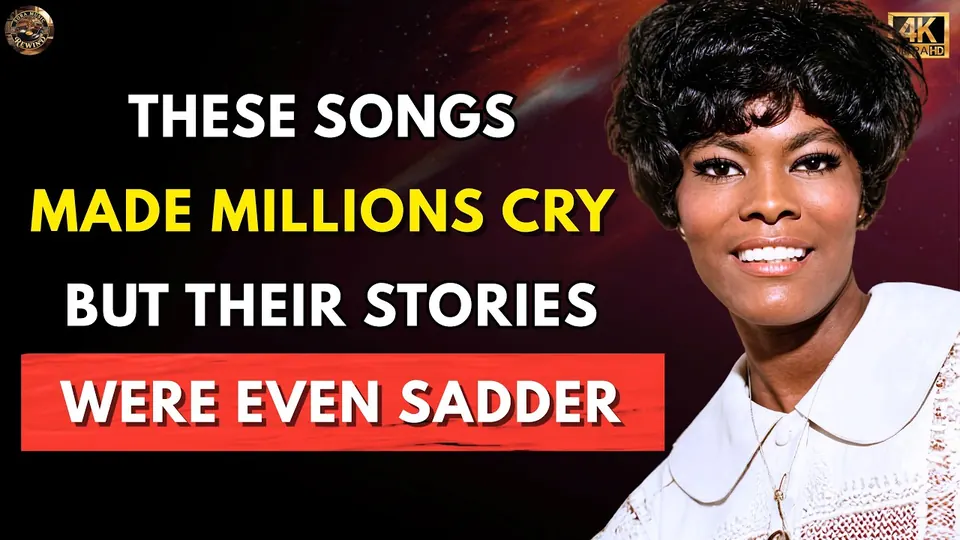
About These Sad Songs From 1964
The sad songs from 1964 arrived in a year better remembered for screaming Beatles fans and bouncy pop. Yet some of its most lasting records were about endings.
This episode counts down ten of them. The release dates, chart positions and stories below were checked against chart histories and other reliable sources, and several details from the video have been corrected.
Which Sad Songs From 1964 Made the List?
#10: You've Lost That Lovin' Feelin' — The Righteous Brothers (1964)
Barry Mann and Cynthia Weil wrote this with producer Phil Spector, and it was recorded at Gold Star Studios in Los Angeles on September 26, 1964. Bill Medley first thought it sounded more like an Everly Brothers song than one for him and Bobby Hatfield.
Medley sings the first verse alone. When Hatfield asked what he should do meanwhile, Spector reportedly told him to go straight to the bank.
The record ran 3:45, long for radio then, so Spector had "3:05" printed on the label. It reached No. 1 on February 6, 1965, and in 1999 BMI named it the most-played song on American radio and TV of the 20th century.
#9: The House of the Rising Sun — The Animals (1964)
This old folk song had already appeared on Bob Dylan's first album in 1962. Touring Britain with Chuck Berry, the Animals used it as their closing number to stand out.
On May 18, 1964, between tour dates, they recorded it in one take at De Lane Lea Studios in London. Producer Mickie Most was unsure at first but agreed to release it at full length.
It went to No. 1 in Britain, Canada and the United States, the first British Invasion No. 1 in America not made by the Beatles. Only organist Alan Price was credited for the arrangement, a sore point with his bandmates for years.
#8: Where Did Our Love Go — The Supremes (1964)
Holland-Dozier-Holland's song did not impress the Supremes at first. Florence Ballard wanted something stronger, and the group found it "kiddie-ish."
The track had been cut in a key that suited Mary Wilson, but Diana Ross got the lead and was told to sing lower than her usual high register. That cooler, softer sound became the signature of the record.
While the group toured with Dick Clark's Caravan of Stars that summer, the single climbed to No. 1, holding the top spot for two weeks in August 1964. It was the first of the Supremes' twelve No. 1 hits.
#7: Mr. Lonely — Bobby Vinton (1964)
Bobby Vinton began writing "Mr. Lonely" while serving in the Army in the late 1950s, and finished it with Gene Allan. He recorded it in 1962, and it first appeared on his album Roses Are Red.
Instead of making it his single, Epic gave the song to Buddy Greco, whose version stalled at No. 64. Two years later, Vinton placed his recording at the end of a greatest hits album. Released as a single in October 1964, it reached No. 1 on December 12, 1964.
With the war in Vietnam growing, the lonely soldier in the lyric struck a chord with servicemen. Vinton and Allan later wrote a hopeful follow-up, "Coming Home Soldier," which Vinton recorded in 1966. In 2005, Akon built his hit "Lonely" around a sped-up sample of Vinton's voice.
#6: It's Over — Roy Orbison (1964)
Roy Orbison wrote "It's Over" with Bill Dees and recorded it in Nashville on March 10, 1964. His voice keeps climbing toward the last high note, yet he never shouts.
In America it peaked at No. 9. In Britain it went to No. 1 on June 25, 1964, for two weeks, his second British chart-topper after "Only the Lonely." Orbison died in December 1988, at age 52. In 2019, Morrissey released his own version as a single.
#5: Leader of the Pack — The Shangri-Las (1964)
Producer George "Shadow" Morton wrote this mini-drama with Jeff Barry and Ellie Greenwich, and the vocals were cut in July 1964 at Mira Sound in Manhattan. One story says a real motorcycle was driven into the building for the engine roar, though singer Mary Weiss later denied it.
Released on Red Bird, the label run by Leiber and Stoller, it reached No. 1 on November 28, 1964.
The group was two sets of sisters from Queens, the Weisses and the Ganser twins, and they broke up in 1968. Mary Ann Ganser died in 1970 at 22. Mary Weiss released a solo album, Dangerous Game, in 2007, and died on January 19, 2024, at 75.
#4: Walk On By — Dionne Warwick (1964)
Burt Bacharach and Hal David wrote "Walk On By" in 1963, and Dionne Warwick recorded it at Bell Sound Studios in New York late that year.
Released in April 1964, it reached No. 6 on the Hot 100, topped the Cash Box R&B chart and reached No. 9 in Britain.
Isaac Hayes turned it into a twelve-minute soul epic in 1969, Warwick's recording entered the Grammy Hall of Fame in 1998, and Doja Cat's 2023 No. 1 hit "Paint the Town Red" sampled it.
#3: Last Kiss — J. Frank Wilson and the Cavaliers (1964)
Wayne Cochran began writing "Last Kiss" in the 1950s, after living near a dangerous rural highway, and recorded it in 1961 without success. A few years later it reached a band from San Angelo, Texas, through their manager, Sonley Roush. They cut it in August 1964.
That fall, with the record at No. 3, the group was traveling between shows when Roush fell asleep at the wheel. The car struck a truck head-on and Roush was killed. Wilson, badly hurt, was back on tour within about a week, singing on crutches. The single peaked at No. 2 on November 7, 1964. In 1999, Pearl Jam's version also reached No. 2, with proceeds going to Kosovo refugees.
#2: Don't Let the Sun Catch You Crying — Gerry and the Pacemakers (1964)
Gerry and the Pacemakers came from Liverpool, and their first three singles all went to No. 1 in Britain in 1963.
This gentle ballad, credited to all four members, was a change of pace. They performed it on The Ed Sullivan Show on May 3, 1964, and it climbed to No. 4 in America, their biggest hit there.
After the Hillsborough disaster in 1989, Gerry Marsden joined Paul McCartney and other Liverpool artists on a charity re-recording of "Ferry Cross the Mersey." He appeared with Take That at Anfield in June 2019, and died on January 3, 2021, at age 78.
#1: A Change Is Gonna Come — Sam Cooke (1964)
On October 8, 1963, Sam Cooke and his group were turned away from a Holiday Inn in Shreveport, Louisiana, after a clerk said there were no rooms. Later, at another motel, they were arrested for disturbing the peace.
Cooke had been moved by Bob Dylan's "Blowin' in the Wind" and wanted to write something as strong. He said the song came to him in a dream. Arranger René Hall wrote it like a film score, with strings, horns and timpani.
It was recorded at RCA Studios in Hollywood on January 30, 1964. When Bobby Womack said it sounded like death, Cooke agreed and decided not to perform it in public. The only time he sang it on television was on The Tonight Show on February 7, 1964.
Cooke was shot and killed in Los Angeles on December 11, 1964. On December 22, the song, first heard on his album Ain't That Good News, was issued as the B-side of "Shake." It peaked at No. 31 on the Hot 100 but became an anthem of the civil rights movement, and Rolling Stone ranked it No. 3 on its 2021 list of the 500 greatest songs.
Why These 1964 Songs Still Move Listeners
None of these songs needed to shout. A woman hides her tears on the sidewalk, a soldier waits for mail, a singer quietly admits it is over. The sadness comes through in small details most listeners have lived through.
Some stories behind the records are sad too. That may be why these sad songs from 1964 still feel so close to home.
Which of these songs brings back a memory for you, and who comes to mind when you hear it?
Sources and Further Reading
Topics in This Story
Your turn...
Do you remember all 10? Which one still brings a tear to your eye?
Tell us the story — fellow fans would love to hear it.
We check every fact — but if you spot a mistake, we'd love to know.Report a correction →