 21:38Oldies Music · 1966 · Greatest Hits by Year
1966 Radio Hits From Your Childhood
Episode: Top 10 Most Nostalgic Radio Hits of 1966 from Your Childhood
From Sora Music Rewind · 21 min ·This episode plays on YouTube — the button opens it in a new tab.
About These 1966 Radio Hits
These 1966 radio hits are the songs that once spilled out of car dashboards, kitchen counters and little transistor sets tucked under pillows after bedtime. One dial could carry a string octet, a sitar and a Michigan garage band in the same hour.
This episode counts down ten of those records. The stories below were checked against chart histories and other reliable references, and a few details from the video have been corrected.
Which 1966 Songs Made the Countdown?
#10: Good Vibrations — The Beach Boys (1966)
Brian Wilson treated this single like a puzzle, cutting short sections in different rooms and fitting them together later. The work stretched over about seven months and four Hollywood studios and used more than 90 hours of tape.
The ghostly, sliding tone came from an Electro-Theremin, played by Paul Tanner. Wilson had first tried it a few months earlier on "I Just Wasn't Made for These Times," a quieter track on Pet Sounds.
It became the Beach Boys' first single to reach No. 1 in both America and Britain, topping the Hot 100 on December 10, 1966. It is often called Brian Wilson's last composition to reach the American Top 10, though the band itself returned there in later decades.
#9: Eleanor Rigby — The Beatles (1966)
Paul McCartney's lonely heroine started life with a different name, Miss Daisy Hawkins. No guitars or drums appear. George Martin scored it for eight string players, drawing on Bernard Herrmann's music for Psycho, and chose a take played without vibrato for a colder, starker sound.
The song spent four weeks at No. 1 in Britain and reached No. 11 in America. It arrived in August 1966, as Lennon's "more popular than Jesus" remark stirred an uproar in the States, and won McCartney a Grammy the next spring.
#8: Paint It Black — The Rolling Stones (1966)
The Stones cut this song at RCA Studios in Los Angeles in March 1966. Their first try sounded like ordinary pop, and nobody liked it. During a pause, Bill Wyman's heavy organ bass gave the group a darker, faster idea to chase.
Brian Jones supplied the buzzing sitar. He had studied it with Harihar Rao, a disciple of Ravi Shankar, after talking with George Harrison about the instrument. The record became the first song featuring a sitar to top the American chart, and it was No. 1 in Britain too.
The lyrics deal with grief after a sudden loss. Many listeners later tied the song to Vietnam, especially after it closed Full Metal Jacket in 1987, though the band never presented it as a war song.
#7: These Boots Are Made for Walkin' — Nancy Sinatra (1966)
Nancy Sinatra's career was stalling, and her place at Reprise, her father's label, was far from secure. Lee Hazlewood had a song he meant to keep for himself, saying it was "not really a girl's song." Nancy disagreed and won the argument.
Hazlewood steered her toward a tougher, more knowing delivery. With Chuck Berghofer's double bass stepping down the scale, the single entered the chart in January 1966 and was No. 1 by late February.
In 2024, Beyoncé opened her track "Ya Ya" with a sample of it, and Nancy wrote online that it might be the best sample of "Boots" yet.
#6: Sunny — Bobby Hebb (1966)
Bobby Hebb and his older brother Harold had performed as a song-and-dance team in Nashville since Bobby was three. On November 23, 1963, the day after President Kennedy was killed, Harold was stabbed to death outside a Nashville nightclub.
Hebb turned to songwriting after those two losses. He later said he wanted to think of happier times and pay tribute to his brother, which may explain why such a cheerful tune carries so much feeling.
"Sunny" reached No. 2 on the Hot 100 in August 1966, held back only by "Summer in the City," and No. 3 on the R&B chart. That year Hebb toured with the Beatles. Boney M. revived it in 1976, and hundreds of other versions have followed.
#5: When a Man Loves a Woman — Percy Sledge (1966)
Percy Sledge worked as an orderly at Colbert County Hospital in Alabama and sang on weekends with a local band. He said the song came from a breakup: after he lost a construction job in 1965, his girlfriend left to pursue a modeling career.
A former patient, producer Quin Ivy, helped him get a contract, and Sledge recorded the song in February 1966 at Ivy's Norala studio in Sheffield, Alabama. Despite Atlantic's worries about off-key horns, the original take is the one that came out.
The single went to No. 1 on both the pop and R&B charts and became Atlantic's first gold record.
#4: 96 Tears — ? and the Mysterians (1966)
The singer called himself simply "?" and claimed his soul came from Mars. His real name was Rudy Martinez, and the band grew up in Bay City and Saginaw, Michigan, in Mexican American families that had come north to work the fields.
In 1966 they recorded the song at Lilly Gonzales's small four-track studio in Bay City for her Pa-Go-Go label. It was meant as the B-side, but Martinez urged Michigan stations to flip the record, and CKLW in Windsor, Ontario, heard all over Detroit, played it heavily.
Cameo-Parkway took it national, and on October 29, 1966, "96 Tears" was No. 1 on the Hot 100. Writers have since called it a strong candidate for the first punk rock song.
#3: Wild Thing — The Troggs (1966)
Chip Taylor said he had the chorus within a couple of minutes. A New York group called the Wild Ones released it in November 1965, and it went nowhere.
The Troggs' manager, Larry Page, thought the song was odd enough to try. An engineer on the Wild Ones' record had whistled a solo through his cupped hands, and the Troggs copied it on an ocarina.
Their version reached No. 1 in America on July 30, 1966. Its three simple chords made it a favorite for teenagers learning guitar.
#2: You Don't Have to Say You Love Me — Dusty Springfield (1966)
The melody began in Italy as "Io che non vivo (senza te)," sung by Pino Donaggio at the 1965 Sanremo Festival. Dusty Springfield was in the audience and, by many accounts, was moved to tears without understanding the words.
About a year later, two friends wrote an English lyric: Vicki Wickham, a producer of Ready Steady Go!, and Simon Napier-Bell, manager of the Yardbirds. Neither had real songwriting experience, and Napier-Bell recalled finishing part of it in a taxi.
Dusty disliked the sound of the vocal booth and sang in a stairwell, reportedly taking dozens of passes. The record went to No. 1 in Britain and No. 4 in America, her biggest hit in both. In 1970 she told a newspaper she could be drawn to women as well as men, a rare and brave thing for a star to say then.
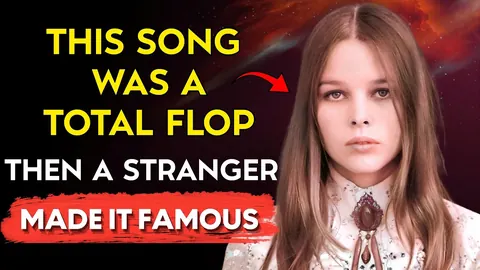
#1: California Dreamin' — The Mamas and the Papas (1966)
John and Michelle Phillips were living in New York during the bitter winter of 1963. Michelle has recalled John waking her in the middle of the night to share a song he was writing, and she helped finish it. A visit to St. Patrick's Cathedral fed into the second verse.
Released in December 1965, the single entered the Hot 100 in January 1966 and peaked at No. 4 that March.
The harmony hid real strain. In June 1966, after an affair with Gene Clark of the Byrds, Michelle was pushed out of the group. She was brought back that August, but the marriage ended in 1969.
Why These Songs Still Sound Like Home
None of these records followed a formula. One was pieced together over months, one was sung in a stairwell, and one came from a small studio in a Michigan town. Several grew out of loss, yet they gave listeners something warm to hold on to.
That is why the 1966 radio hits in this countdown still feel personal. They were the background to first jobs, family drives and late nights by the radio.
Which of these songs do you most connect with a certain place or person, and what was playing on your radio in 1966?
Sources and Further Reading
Topics in This Story
Your turn...
Which song takes you right back — and where were you when you first heard it?
Tell us the story — fellow fans would love to hear it.
We check every fact — but if you spot a mistake, we'd love to know.Report a correction →
More Greatest Hits by Year Stories
21:38Oldies Music · 1966 · Greatest Hits by Year 19:33Oldies Music · 1967 · Greatest Hits by Year
Forgotten Hits of 1967 You Forgot You Knew
 25:16Oldies Music · 1969 · Greatest Hits by Year