 24:25Oldies Music · 1970s · Classic Movie Songs
1960s Movie Songs That Defined a Generation
Episode: Top 10 Movie Songs From the 1960s That Defined a Generation
From Sora Music Rewind · 25 min ·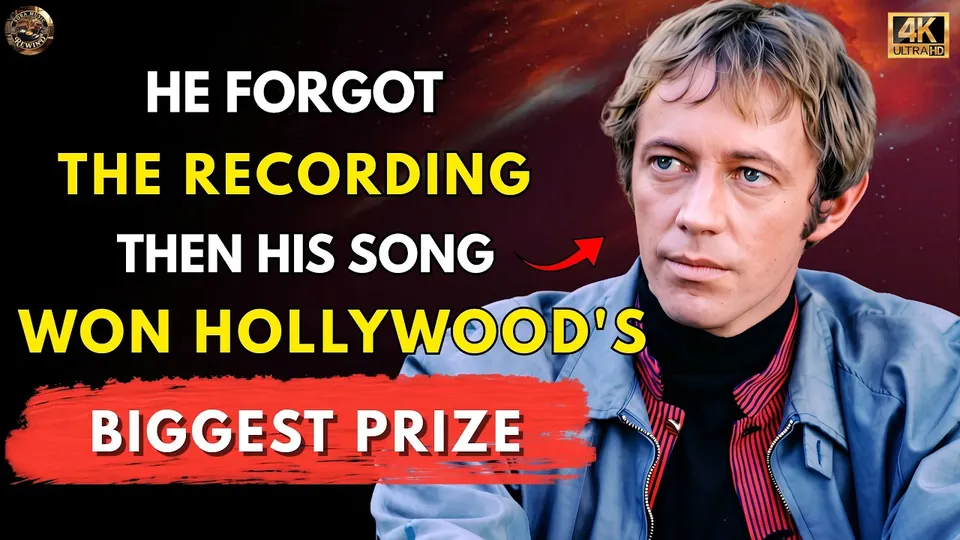
About These 1960s Movie Songs
The best 1960s movie songs did something rare: they walked out of the theater and kept living on the radio, at weddings and in record collections for decades. A few nearly never made it onto the screen at all.
This countdown follows our episode from #10 to #1. Chart positions, awards and behind-the-scenes stories below were checked against Billboard chart records, Academy Awards and Grammy records, and other reliable sources.
The Countdown: 10 Movie Songs That Defined the 1960s
#10: Mrs. Robinson — Simon and Garfunkel (1968)
While Paul Simon was writing songs for Mike Nichols' The Graduate, he had an unfinished tune called "Mrs. Roosevelt," a nod to Eleanor Roosevelt. Art Garfunkel suggested changing the name to "Mrs. Robinson," and Nichols took the idea for the film.
The song was not finished yet, so the film uses only fragments of it, with the duo filling gaps in the vocal with placeholder sounds. The complete single came out in April 1968 and spent three weeks at No. 1 on the Billboard Hot 100 that June.
At the 1969 Grammy Awards it won Record of the Year, often described as the first rock song to take that prize.
#9: Born to Be Wild — Steppenwolf (1968)
Mars Bonfire, whose brother Jerry played drums in Steppenwolf, wrote the song. By his own account, two things sparked it: a "Born to Ride" poster on Hollywood Boulevard showing a motorcycle bursting from the ground, and the freedom of driving his first car, a secondhand Ford Falcon. He later told Guitar Player that he had never even been on a motorcycle.
Released in 1968, the single reached No. 2 on the Billboard Hot 100, held back only by the Rascals' "People Got to Be Free." The episode dates it to 1969, but that was the year of Easy Rider, the Dennis Hopper film that made the song a lasting anthem for bikers and the open road.
The lyric "heavy metal thunder" refers to a motorcycle, yet the song is sometimes called one of the first heavy metal records.
#8: Goldfinger — Shirley Bassey (1964)
John Barry composed and arranged the theme, with lyrics by Leslie Bricusse and Anthony Newley, and he chose Shirley Bassey to sing it. He oversaw the session himself.
That big final note was the hardest part. Bassey stepped behind a studio partition between takes to loosen her clothing, and she later said she was "going blue in the face" holding it and nearly passed out when it ended.
The single reached No. 8 on the Billboard Hot 100, her only Top 40 hit in America.
#7: Somewhere, My Love (Lara's Theme) — Maurice Jarre (1965)
David Lean was not happy with Maurice Jarre's first theme for Lara in Doctor Zhivago. He suggested that Jarre go to the mountains with his girlfriend and write a love theme for her. Jarre spent the weekend in the mountains above Los Angeles and came back on Monday with the melody.
To give it a Russian color, Jarre gathered an impromptu balalaika orchestra from Russian Orthodox churches in Los Angeles. The soundtrack won the Oscar for Best Original Score, and the album reached No. 1 on the Billboard album chart in November 1966, about eight months after it first appeared there.
With lyrics by Paul Francis Webster, "Somewhere, My Love" became a No. 9 Hot 100 hit for the Ray Conniff Singers in 1966.
#6: Alfie — Cilla Black and Dionne Warwick (1966)
Burt Bacharach and Hal David were not eager to write a promotional song for the British film Alfie. Because the story was set in London, Paramount wanted a British singer. After Sandie Shaw declined, the job went to Cilla Black, who recorded it at Abbey Road in late 1965 and took it to No. 9 in Britain.
American audiences actually heard a different voice: a 20-year-old Cher sang the version used in the U.S. release of the film. By August 1966, at least eight American recordings were on the market.
The song was nominated for the Academy Award for Best Original Song and lost to "Born Free," which also appears in this countdown. Dionne Warwick sang it at the Oscars, and her single reached No. 15 in 1967. Bacharach later called "Alfie" his personal favorite of all his songs.
#5: Everybody's Talkin' — Harry Nilsson (1969)
Folk singer Fred Neil wrote this song near the end of an album session, partly because he was anxious to finish and go home to Miami. Producer Rick Jarrard later played it for Harry Nilsson, who recorded his own version in November 1967.
Director John Schlesinger chose Nilsson's recording as the theme for Midnight Cowboy. The film was released with an X rating, and it went on to win Best Picture, Best Director and Best Adapted Screenplay. It remains the only X-rated film ever to win Best Picture.
Re-released in 1969, the single reached No. 6 on the Hot 100 and won Nilsson a Grammy for Best Contemporary Vocal Performance, Male.
#4: Born Free — Matt Monro (1966)
Born Free told the true story of Joy and George Adamson, a couple in Kenya who raised an orphaned lion cub named Elsa. John Barry wrote the music and Don Black the lyrics, and Black's client Matt Monro recorded it.
The producers did not think much of the song and cut it from the print shown at the Royal Command premiere in London. Monro, who attended, told Black, and the two persuaded the producers to restore it. A shortened version over the closing credits made it eligible for the Oscar, and it won Best Original Song.
The real story behind the film later turned tragic. Joy Adamson was killed in Kenya in 1980, and George Adamson was killed by bandits in 1989.
#3: What's New Pussycat? — Tom Jones (1965)
Bacharach and David wrote this deliberately wild, oversized tune for a comedy written by a young Woody Allen. Tom Jones was not sure about it at first. Bacharach told him he wanted "the big voice" to sing this crazy song, and Jones gave it everything.
The film's title reportedly came from Warren Beatty's habit of greeting women on the phone with a playful line. The song reached No. 3 on the Hot 100 and earned an Oscar nomination, losing to "The Shadow of Your Smile."
#2: A Time for Us (Love Theme from Romeo and Juliet) — Nino Rota (1968)
Nino Rota wrote the score for Franco Zeffirelli's 1968 Romeo and Juliet, which cast teenagers Olivia Hussey and Leonard Whiting in the title roles. English lyrics by Larry Kusik and Eddie Snyder later turned the love theme into the song "A Time for Us."
Henry Mancini's instrumental arrangement went all the way to No. 1 on the Billboard Hot 100 on June 28, 1969, and stayed there for two weeks.
#1: The Windmills of Your Mind — Noel Harrison (1968)
For a glider scene in The Thomas Crown Affair, director Norman Jewison first cut the footage to the Beatles' "Strawberry Fields Forever." He then asked Michel Legrand for an original song, and Alan and Marilyn Bergman wrote the lyrics.
Noel Harrison recorded it live on a large Paramount sound stage while film clips played on a giant screen and Legrand conducted the orchestra. The song won the Academy Award for Best Original Song in April 1969.
Harrison was not at the ceremony. He said he was making a film in England and his producer would not let him go, so José Feliciano sang it that night. Harrison's version reached No. 8 in Britain, while Dusty Springfield's recording became the American hit, reaching No. 31.
Why These 1960s Movie Songs Still Matter
Many of these songs nearly did not happen. A title came from a last-minute name swap. A theme was written after a director sent his composer to the mountains. A song was cut from a royal premiere and saved by its singer.
They also outlived their films. Plenty of people can hum "Born Free" or "Alfie" without remembering a single scene, and that is the mark of a song that found a life of its own.
Which of these 1960s movie songs takes you back to a certain theater, a certain date or a certain summer?
Sources and Further Reading
Topics in This Story
Your turn...
Which song takes you right back — and where were you when you first heard it?
Tell us the story — fellow fans would love to hear it.
We check every fact — but if you spot a mistake, we'd love to know.Report a correction →
More Classic Movie Songs Stories
24:25Oldies Music · 1970s · Classic Movie Songs 24:01Oldies Music · Classic Movie Songs
Movie Songs That Almost Got Cut From the Film
 21:38Oldies Music · 1966 · Greatest Hits by Year